Our Holy Mother,
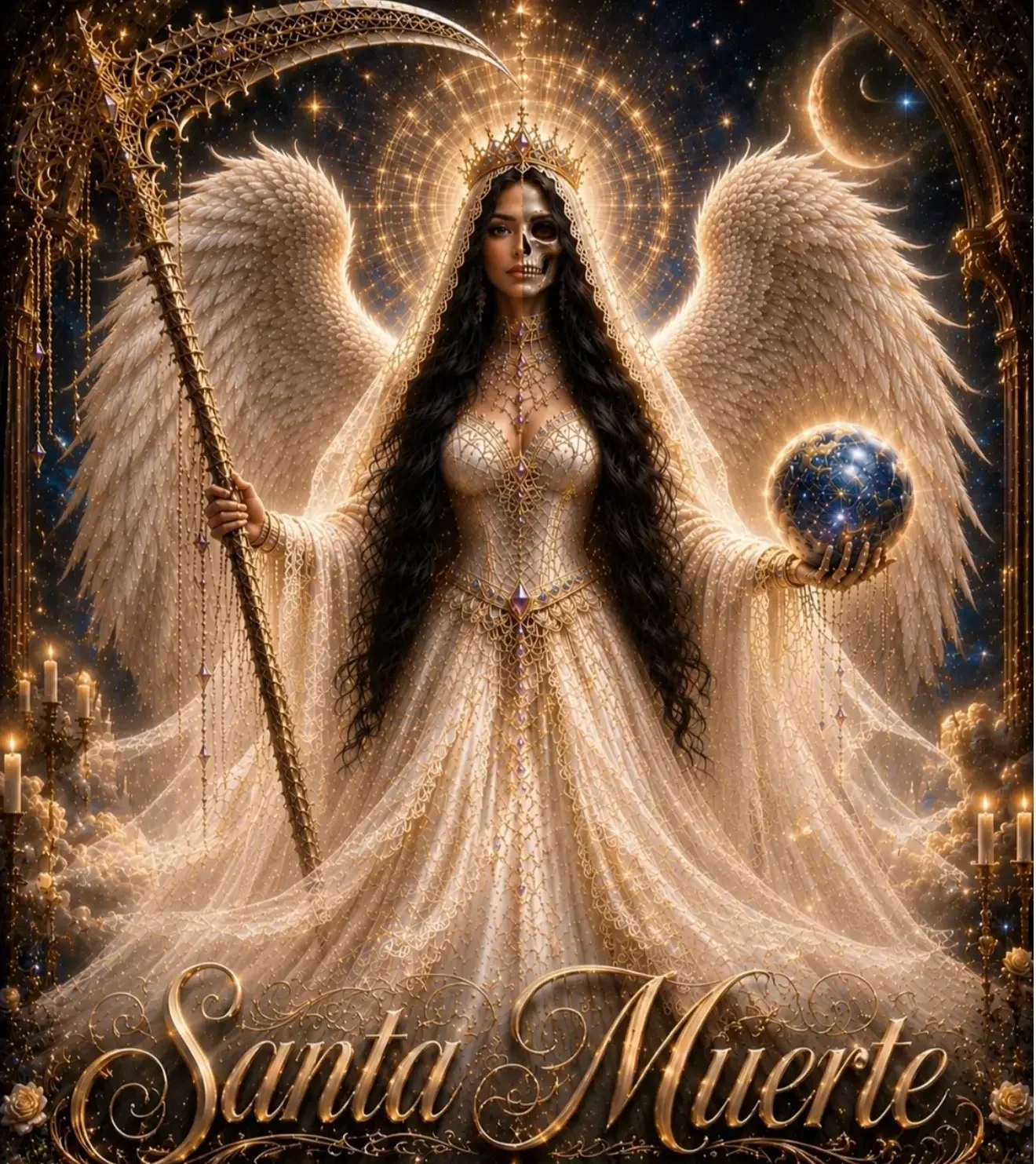
Santísima Muerte, lovingly known as Our Holy Mother of Death, is a deeply revered folk saint honored by millions of devoted followers throughout Mexico and around the world. To those who walk beside her, she symbolizes protection, justice, healing, transformation, strength, and the sacred cycle of life and death.
She reminds us that before the Creator, every soul is equal regardless of wealth, status, background, or past mistakes. Her love is not reserved for a select few; she welcomes all who approach her with genuine faith, humility, respect, and a sincere heart.
For many devotees, Santísima Muerte is a constant source of comfort during life's greatest joys and most difficult challenges. She is honored as a compassionate spiritual guide who inspires courage, hope, resilience, and inner peace while encouraging her followers to walk their path with honesty, responsibility, and devotion.
At Divine Brujita DJ, every prayer and devotional offering is made with the deepest reverence and gratitude for Our Holy Mother. She is honored with love, respect, and unwavering faith, recognizing her as a powerful symbol of compassion, protection, and spiritual guidance.
Nuestra Santísima Muerte.
Nuestra Madre.
Siempre con nosotros.
-
She is known by many names, including La Niña Blanca, La Flaquita, Santísima, Madre, and Lady Death. To many of us, she is simply Madre our Holy Mother.Beneath our skin, beyond our titles, mistakes, and differences, we are all bones. We are all equal, and she reminds us of that truth.
✨ She does not judge.
✨ She does not reject.
✨ She does not discriminate.
She welcomes everyone, regardless of your past, your struggles, your skin color, your status, or who you love. In a world where many feel unseen or unheard, she listens.
-
When you feel alone, she stands beside you. When you are afraid, she gives you strength. Many people fear her because she represents death, but death itself is not evil. It is natural, inevitable, and sacred. She walks before you to help guide your path. She walks beside you to support you when you are weak. She walks behind you to help protect you from betrayal and harm. She whispers intuition into your heart, reveals what is hidden, and sees both what is spoken and what remains unspoken. She knows the intentions of those around you and helps guide you with wisdom.
-
Offerings are never bribes—they are expressions of gratitude and devotion.
Common offerings include:
• A candle
• Fresh flowers
• A heartfelt prayer
• A glass of water
• A shot of tequilaShe does not measure devotion by money.
She measures it by sincerity, respect, and faith.
-
Anyone can come into her arms.
The rich.
The poor.
The broken.
The hopeful.
Because death comes for us all equally, there is unity in her embrace.
She reminds us that every life has value and every soul deserves compassion.
-
Santísima Madre is not something to fear.
She is a reminder to:
• Live fully.
• Love deeply.
• Forgive quickly.
• Walk with faith.
• Appreciate the time we are given.

Learn more about Santísima Madre through some of the questions I am asked most often.
Frequently Asked Questions
-
No. Death itself is not inherently evil; it is a natural and inevitable part of life. However, because some individuals involved in criminal activity have publicly displayed devotion to her, she has developed a controversial reputation. The actions of individuals do not define a spiritual symbol.
-
For most devotees, no. Many view her as a spiritual figure under divine authority, not above it. Beliefs vary, but devotion to Santa Muerte does not necessarily replace belief in God.
-
The skeletal form represents mortality and truth. Beneath wealth, power, race, and identity, all humans share the same bones.
Her image symbolizes equality and the reality that life is temporary.
-
Devotees often associate colors with specific intentions:
White — purity and cleansing
Red — love and relationships
Gold — prosperity and abundance
Green — justice and legal matters
Black — protection and strength
Purple — spiritual growth
Blue — wisdom and clarity
Color symbolism may vary between practitioners.
-
Yes. Many devotees maintain private home altars that may include:
Candles
Flowers
Water
Incense
Fruit or sweets
Personal petitions
Altars are acts of devotion and gratitude, not obligation.
-
Practices vary. Some devotees identify as Catholic or Christian while privately honoring Santa Muerte. Others approach her independently as a folk spiritual figure. Devotion is often personal rather than institutional.
-
She is sometimes invoked in folk spiritual practices. However, devotion itself is not inherently "black magic." How someone practices is determined by their intention.
Many devotees focus solely on prayer, protection, and personal spiritual relationship.
-
Santa Muerte exists outside traditional religious institutions. Her association with marginalized communities and media portrayals linking her to crime have contributed to controversy.
Despite this, her following continues to grow worldwide.
-
For devotees, prayer is an act of faith, not danger. As with any spiritual path, sincerity, respect, and discernment are emphasized.
-
Life is temporary.
Time is precious.
All people are equal in death.
Therefore: live fully, love deeply, and move with awareness.
-
Yes. Devotion to Santa Muerte is personal. There is no requirement of background, ethnicity, or status to approach her. She is often seen as accessible to all, especially those who feel unseen, judged, or marginalized.
What matters most is sincerity and respect.
-
No. An altar is a devotional practice, not a requirement. You may light a simple white candle, offer a glass of water, or speak from your heart. Devotion begins with intention, not decoration.
-
Offerings vary by tradition and region. Common offerings may include:
Candles
Fresh water
Flowers
Incense
Fruit or sweets
Personal prayers
Offerings are gestures of gratitude, not transactions.
-
In traditional devotional belief, Santa Muerte is honored with respect and consistency. Many devotees choose to give her a dedicated space out of reverence.
-
Devotional relationships are personal. Some believe consistency strengthens connection, while others view faith as fluid. Spiritual growth evolves, and devotion should come from sincerity, not obligation.
-
Many devotees pray to her for protection during uncertain times. Protection, in devotional understanding, means guidance, awareness, and spiritual steadiness, not invincibility.
-
Santa Muerte is often associated with justice because death ultimately equalizes all people. Devotees may pray for fairness or for truth to surface in difficult situations.
-
Practices vary. Some devotees identify with other religions while privately honoring Santa Muerte. Others practice independently. Devotion is often personal rather than institutional.
-
The scythe represents the cutting away of illusion, negativity, and the end of cycles. It symbolizes both endings and new beginnings.
-
The globe represents dominion over the world, a reminder that death touches all corners of humanity.
-
Dream interpretation is personal. For devotees, dreams may symbolize reflection, guidance, or subconscious processing. Not every dream has a literal meaning.
-
Respect.
Consistency.
Sincerity.
Devotion should never come from fear. It should come from faith.
-
No. While her roots are deeply tied to Mexican culture, devotion has spread internationally. Respect for her cultural origins is important, but devotion itself is not limited by ethnicity.
-
There is no single required title. Many devotees lovingly call her Santísima Madre, Santa Muerte, La Niña Blanca, La Santísima, or simply Madre. What matters most is sincerity and respect.
-
Western culture often associates skeletal imagery with darkness or horror. Additionally, media portrayals have linked her image to crime. Fear usually stems from unfamiliarity rather than understanding.
-
Beliefs vary widely among devotees. Many who honor Santa Muerte still believe in heaven, God, and traditional afterlife concepts. Devotion does not automatically replace other theological beliefs.
-
No spiritual relationship should be based on fear or obligation. Devotion is rooted in sincerity. Offerings are gestures of gratitude, not contracts.
-
That she represents darkness or evil. For devotees, she represents truth, equality, and inevitability, reminding people to live consciously and with awareness.
-
That life is temporary.
That time is sacred.
That status does not matter in death.
That humility is wisdom.
That awareness deepens gratitude.
-
Yes. Devotion can be as simple as prayer, reflection, or learning about her symbolism. Not all devotees practice elaborate rituals.
-
The scales symbolize justice and balance. They reflect the idea that death ultimately brings equality and fairness.
-
In some depictions, the owl represents wisdom, night vision, and the ability to see what is hidden. Symbolism can vary depending on the artist or tradition.
-
Some practitioners incorporate her image into folk spiritual practices, but devotion itself is not inherently witchcraft. Many followers limit their practice to prayer and offerings. The connection depends on how individuals choose to practice.
-
The term "Madre" reflects affection, closeness, and protection. It expresses personal devotion rather than formal theology.
-
Yes. Many devotees practice privately due to social stigma or personal preference. Spiritual devotion does not require public display.
-
No. Santa Muerte is not Satan. The association often comes from misunderstanding or religious disagreement. In devotional belief, she represents mortality, not rebellion against God.
-
No. Fear-based devotion contradicts the idea of sincere faith. Devotion is traditionally rooted in respect and acknowledgment, not terror.
-
The different colored robes symbolize different intentions or aspects, such as protection, love, justice, or prosperity. These color associations developed through devotional tradition.
-
While deeply rooted in Mexican culture, devotion has spread internationally. Understanding and respecting her cultural origins is important when learning about her.
-
That she represents evil or chaos. For many devotees, she represents honesty, inevitability, and equality, themes that can feel intense but are not inherently negative.
-
Start by learning. Read about her history. Understand cultural context. Reflect on why you feel curious. Spiritual paths should be approached with awareness, not impulse.
-
No. Devotion is built on faith and honesty, not obligation. Many devotees choose to make personal promises or commitments, while others simply pray with gratitude and respect.
-
Yes. Many devotees spend time thanking Santa Muerte, talking with her, or praying simply to strengthen their spiritual connection rather than asking for favors.
-
Start with respect, patience, and an open heart. Learn about her history and symbolism, understand her cultural roots, and allow your spiritual journey to develop naturally rather than rushing into practices.